
Much of Greece's road network relies on structures built decades ago that now carry far more traffic than their original designers imagined. Inspecting them safely, quickly and affordably is one of the defining challenges of modern infrastructure engineering. At NAMA Consulting Engineers and Planners, we are meeting that challenge by combining two technologies that are reshaping the field: the digital twin and artificial intelligence.
What a digital twin actually does
A digital twin is a living virtual model of a physical structure. It takes real-world data from the bridge and uses it to run simulations and predictions, allowing our engineers to understand how the structure behaves under specific, real conditions. Because a large bridge is far too complex to assess reliably with traditional methods alone, the digital twin lets us run "what-if" scenarios on a virtual model, determining the current and future condition of the structure easily, accurately and cost-effectively.
Bringing the field into the model
The quality of a digital twin depends on the data feeding it, and this is where our field technology earns its place. Drones capture high-resolution images, video and measurements from angles inspectors cannot safely reach: beneath the deck, along tall piers and over water. IoT sensors embedded in key structural elements stream data on the bridge's condition in real time. Feeding these inputs into the digital twin allows us to detect cracks, corrosion, spalling and wear, and to pinpoint their size and exact location far faster than manual image review.
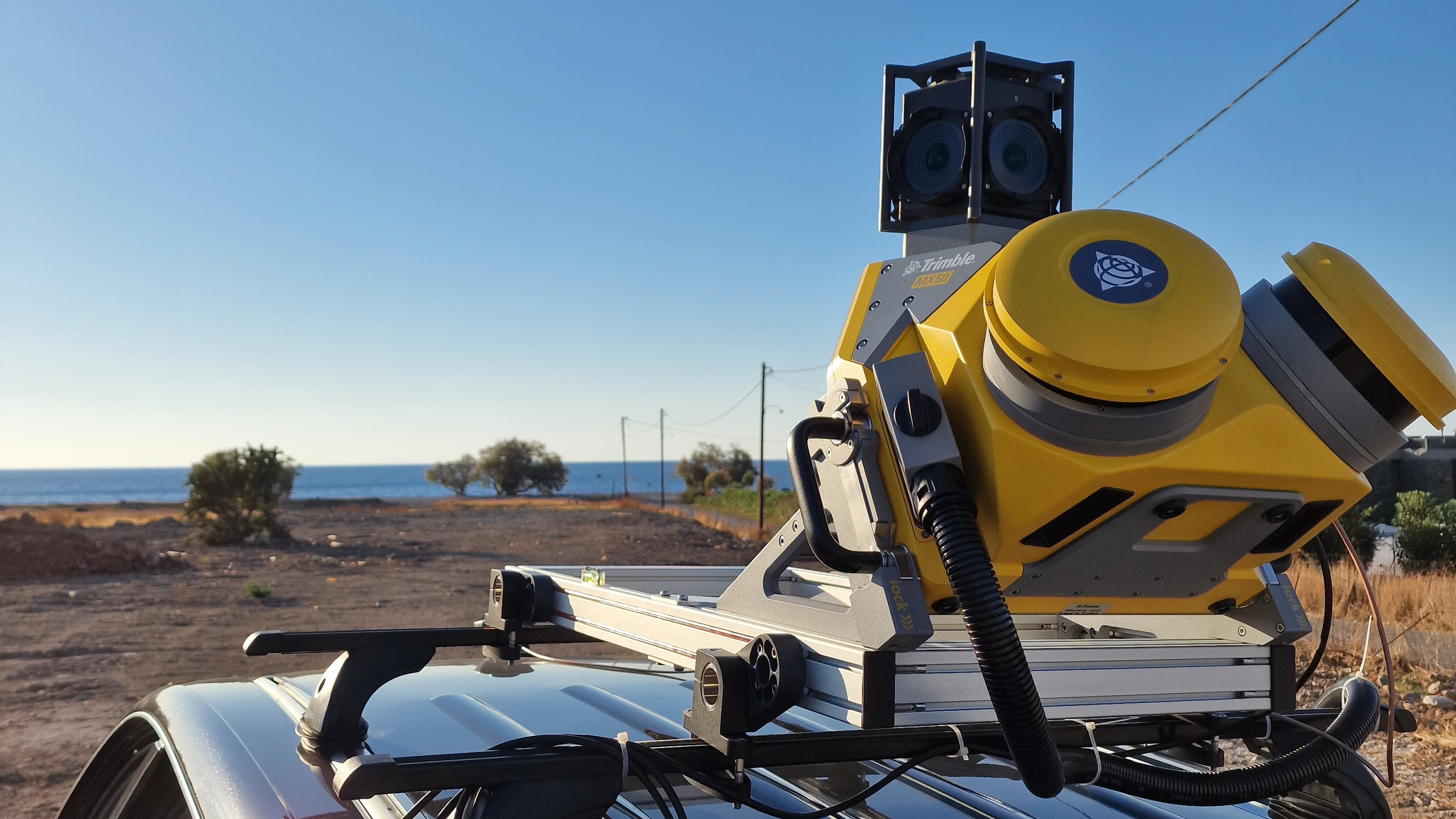
Layered on top, artificial intelligence and machine learning turn that raw data into insight, comparing current findings against historical records to distinguish a stable feature from one that is actively deteriorating.
From inspection to prediction
The real advantage is not just seeing the present clearly, but anticipating the future. By combining historical and current data, the digital twin can forecast how a bridge will behave over time and flag problems that require urgent or scheduled attention before they become critical. Just as importantly, most of this analysis can be carried out from the office, cutting cost and time while improving the safety of inspection teams and road users, and the reliability of every finding.
The Servia High Bridge example
We are applying this methodology on one of Greece's most demanding structures, the Servia High Bridge over the artificial Lake Polyfytos near Kozani. At 1,372 metres it is one of the longest bridges in the country, designed by Riccardo Morandi and completed in the mid-1970s. In recent years, concerns over the condition of its structure triggered its closure and a major programme of structural repairs, underlining exactly why faster, safer inspection matters.
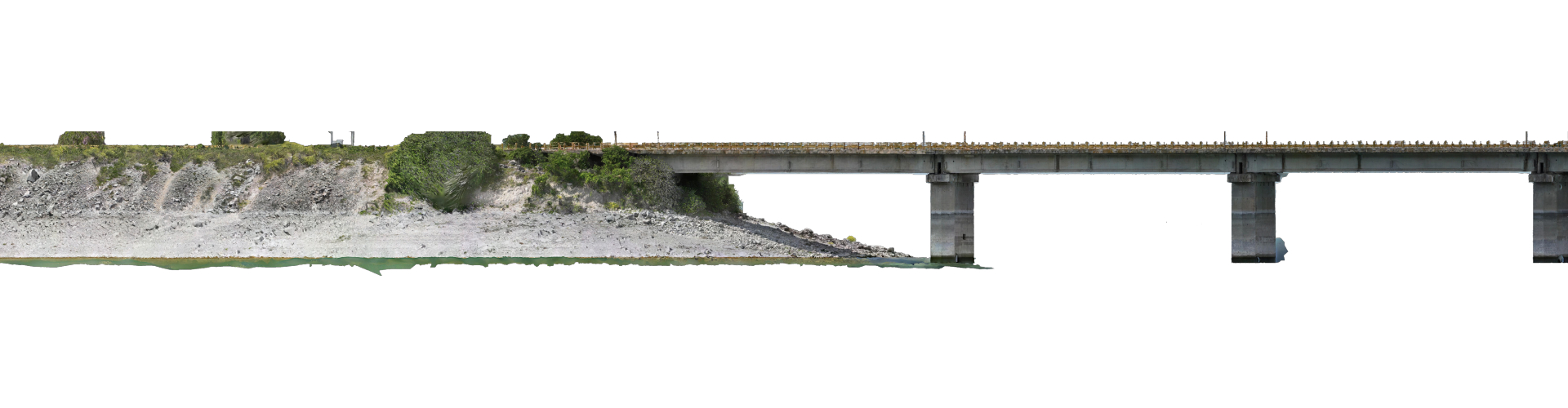
Its complex cantilever geometry, tall piers and setting over water make it precisely the kind of structure where conventional inspection is slow and hazardous, and where a digital-twin approach delivers the most value.
Innovation, engineered in Greece
By pairing the digital twin with AI, drones and IoT sensing, NAMA is bringing a faster, safer and more cost-effective inspection standard to Greek infrastructure. It is an approach that does more than record a bridge's condition on a given day, it helps us plan the maintenance that keeps these landmarks safe for the decades ahead.