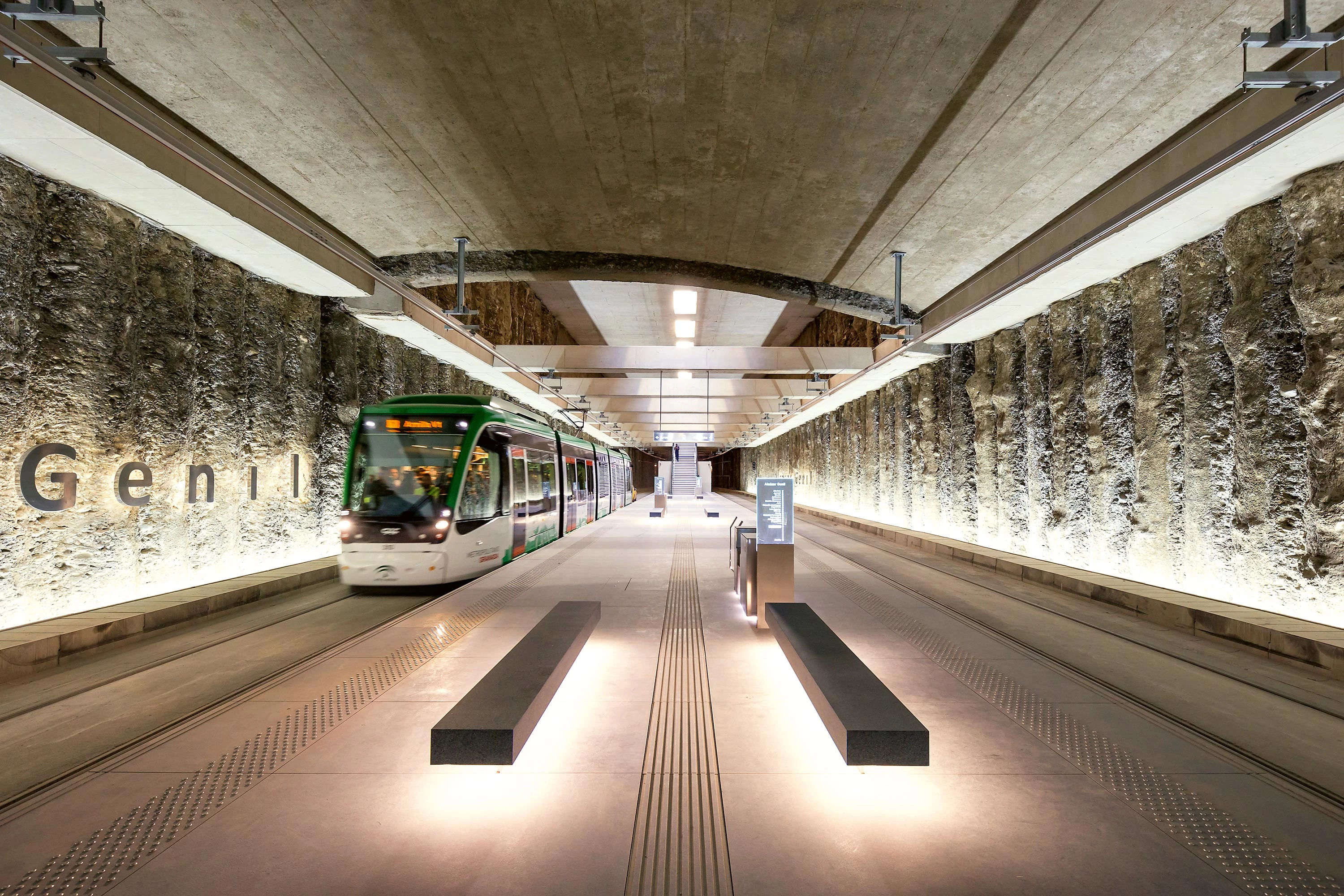
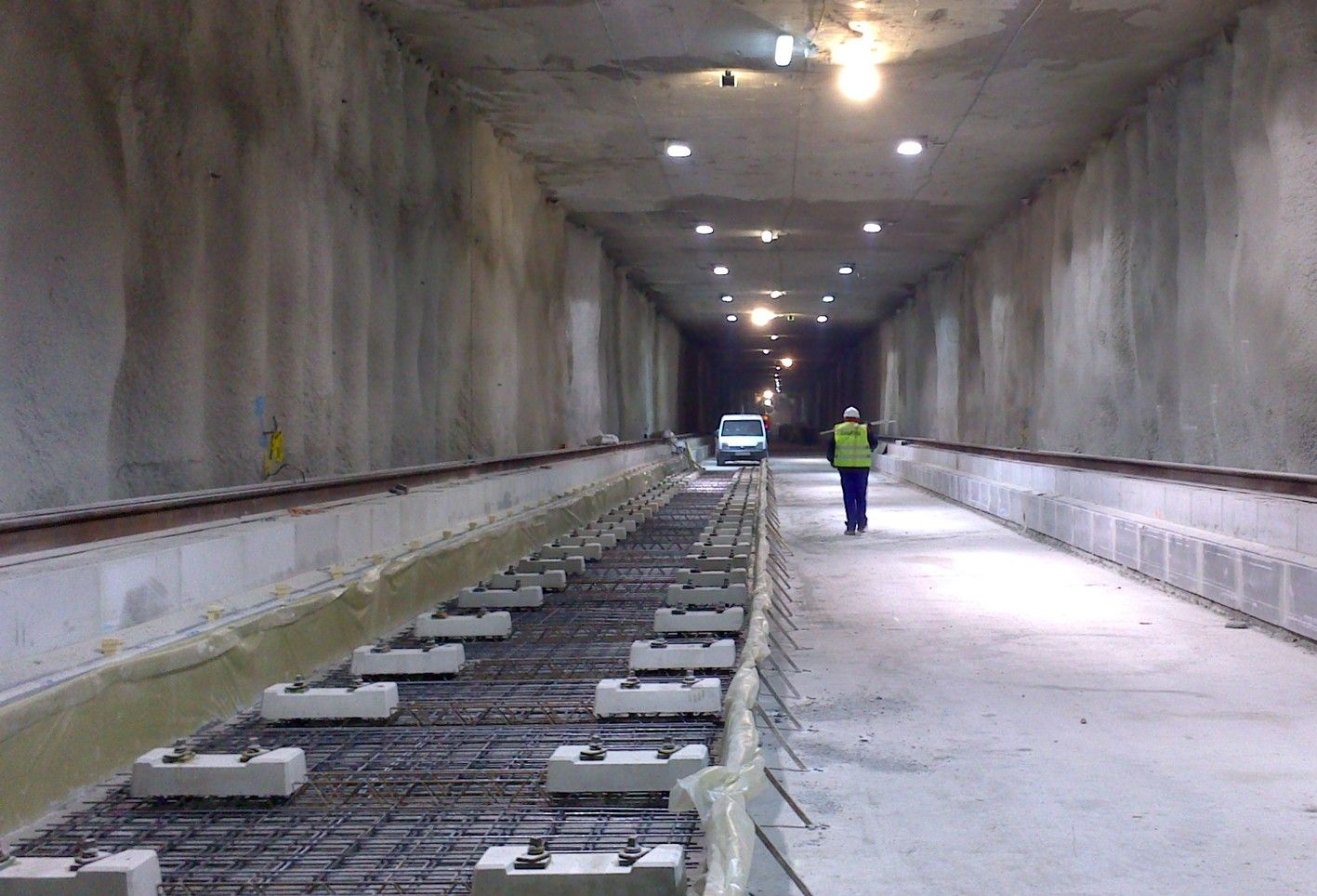
The Granada Metro has changed the rhythm of movement across the city and its metropolitan area. By linking neighbourhoods, education hubs, workplaces and daily destinations through a modern light rail system, it has helped make public transport a more natural part of everyday life in Granada. Within this wider transformation, NAMA contributed to one of the most sensitive parts of the project: the tunnel section between Villarejo and Méndez Núñez, where comfort, vibration control and urban coexistence were especially important.
Rather than focusing only on moving people from one stop to the next, this part of the project was about making the metro work better with the city around it. In a dense urban environment, reducing noise and vibration matters not only for railway performance, but also for the quality of life of the people living, working and moving above it.
Designing a quieter and more refined underground section
NAMA's role focused on the revision of the structural design of the floating slab Rheda City system inside the tunnel section of the Granada Metro.
NAMA's contribution included:
- revision of the structural design for the floating slab track system in tunnel,
- support for a solution specifically intended to reduce ground-borne noise and vibration from tram operation,
- refinement of the design to simplify construction and optimize the structural solution,
- contribution to a more comfortable and better integrated underground railway environment.
This was a highly specialized intervention, but its purpose was simple and human: to help make metro travel through the city centre feel smoother, quieter and more compatible with the urban fabric around it.
Supporting a more liveable and better connected Granada
The wider significance of the Granada Metro goes far beyond a single tunnel section. The system was developed as the first light rail line in Granada, extending across the metropolitan area and helping shift daily travel away from private car use toward a more sustainable public transport model.
Its wider urban and environmental impact includes:
- improving everyday mobility across Granada and its surrounding municipalities,
- supporting a shift from private car use to public transport,
- helping reduce congestion and air pollution,
- strengthening links to key destinations such as the university, the high-speed rail station and major activity centres,
- contributing to a cleaner and more efficient metropolitan transport system,
- improving the urban experience by combining mobility with greater environmental comfort.
The metro's growing use shows how strongly it has become part of daily life in Granada. With demand continuing to rise, it is not only functioning as transport infrastructure, but as a shared urban asset that helps the city move more efficiently and more sustainably.
Through its work on this project, NAMA contributed to an intervention where technical precision served a broader urban purpose: making one of Granada's most sensitive metro sections perform better, feel better and fit more gently into the life of the city.